We Don't Just Want the Show Anymore — We Want to Watch It Get Made
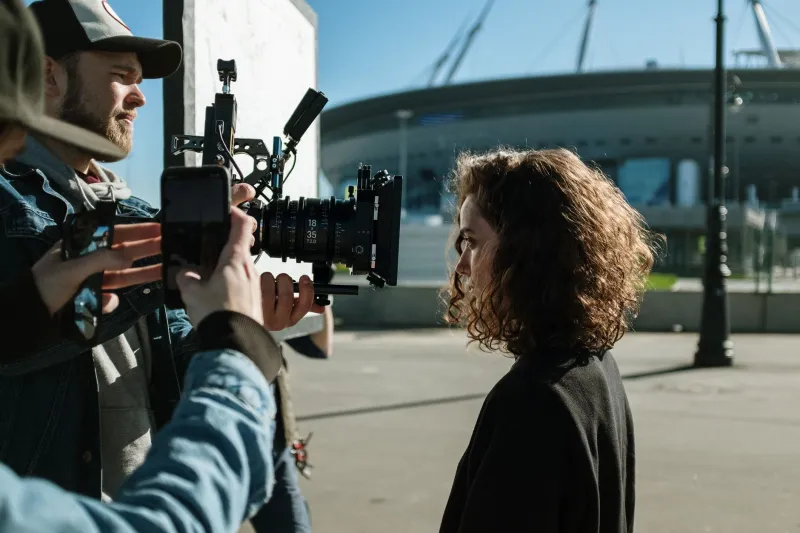
There's a moment in Taylor Swift's Miss Americana documentary — the Netflix one from 2020 — where you see her sitting at a piano, working through a song that isn't finished yet. She's second-guessing herself, rewriting lines, visibly uncertain. It's a far cry from the stadium spectacle most people associate with her. And it's one of the most-discussed scenes in the whole film.
That's not a coincidence.
Something has changed in the relationship between audiences and the people they follow. The polished final product — the album, the movie, the perfectly edited YouTube video — still matters. But it no longer feels like enough. People want the room where it happened. They want the rough drafts, the off-days, the creative arguments, the moment before the performance when the nerves are still showing.
The question worth asking is: why? And what does it mean for entertainment going forward?
The Illusion of Access
Let's start with something a little uncomfortable. Most "behind-the-scenes" content isn't actually unfiltered. It's curated access — a carefully managed peek behind a curtain that has been deliberately positioned for you to peek behind.
When a major film studio releases a "making of" featurette, they're not showing you the creative breakdowns or the budget fights or the scenes that got cut because someone important hated them. They're showing you the version of the process that makes you feel good about the final product and excited to tell your friends about it.
And yet — audiences respond to it as if it's real. As if proximity to the process confers some kind of genuine intimacy with the person making the thing.
This is worth sitting with, because it tells us something important: the appeal of behind-the-scenes content isn't really about truth. It's about the feeling of truth. The aesthetic of rawness. The performance of authenticity.
That sounds cynical, but I don't think it has to be. The feeling of connection that people get from watching a creator in their natural habitat — even if that habitat is somewhat staged — is real, even if the access isn't total. Emotions don't require perfect information to be genuine.
Parasocial Relationships and the Intimacy Economy
Here's where the psychology gets genuinely interesting.
Parasocial relationships — the one-sided emotional bonds people form with public figures they've never met — have existed as long as media has. People felt like they knew Johnny Carson. They grieved like they'd lost a friend when certain celebrities died. That's not new.
What's new is the scale and the intensity of these relationships in the social media era, and the degree to which behind-the-scenes content actively cultivates them.
When a creator posts a video of themselves crying over creative burnout, or a musician shares a voice memo of an unfinished song, or an actor documents their preparation for a difficult role — they're not just sharing content. They're inviting you into a relationship. They're saying: I trust you with this incomplete version of me.
And audiences receive that invitation seriously. They feel trusted. They feel chosen. They feel like they know this person in a way that other fans don't.
The result is a level of loyalty that traditional entertainment models could never manufacture. A fan who feels like they've been let into someone's creative process doesn't just buy the album — they feel invested in it. They feel like it's partly theirs.
For creators, this is enormously powerful. For audiences, it's worth examining honestly.
When Raw Becomes the Product
Somewhere along the way, the behind-the-scenes stopped being supplementary and became the main event.
Look at the trajectory of reality TV, which in some ways was the original behind-the-scenes content. It started as a novelty — The Real World in the early '90s, the first seasons of Survivor — and gradually became one of the dominant entertainment formats in America. The appeal was always the same: real people, messy situations, unscripted moments.
Now that logic has migrated to every corner of the internet. The most-watched content on YouTube isn't polished productions — it's vlogs, day-in-the-life videos, "I tried to make X and here's everything that went wrong" formats. On TikTok, the aesthetic of authenticity — shaky camera, bad lighting, talking directly into the lens — is so valued that it's been reverse-engineered into a style that professionally produced content tries to imitate.
This creates a genuinely strange dynamic. The rawness that audiences crave is increasingly being manufactured. The imperfections are planned. The "real" moments are scripted. And audiences, on some level, know this — but it doesn't entirely break the spell.
Has Entertainment Changed, or Have We?
I keep coming back to this question, and I'm not sure there's a clean answer.
On one hand, the hunger for behind-the-scenes content reflects something real and arguably healthy about how audiences relate to creative work. It demystifies the process. It makes creation feel accessible. When people see that their favorite musician writes terrible first drafts, or that a filmmaker they admire had to throw out six months of work and start over, it makes the possibility of creative work feel more human and less like magic reserved for a special few.
On the other hand, there's something a little melancholy about a culture that struggles to let the finished thing be enough. Part of what makes art powerful is its completeness — the fact that someone took a mess of raw material and shaped it into something whole. When we're constantly peeking at the unfinished version, do we lose some capacity to be moved by the finished one?
Maybe. Or maybe we're just redefining what "finished" means.
In 2024, for a lot of creators and a lot of audiences, the creative journey is the content. The process and the product have merged into something continuous — a stream of work-in-progress that never quite resolves into a final, definitive statement, because the next thing is already being made in public.
That's a genuinely new kind of entertainment. Whether it's better or worse than what came before probably depends on what you were watching for in the first place.
The Bottom Line
We're obsessed with behind-the-scenes content because it makes us feel close to something — and in an era of algorithmic distance and digital overload, that feeling of closeness is genuinely rare and valuable.
Just maybe hold onto a little healthy skepticism about how much of that closeness is real. The best art, after all, has always been about making you feel something true — even when the thing doing the making is, at least partly, a performance.