Everything You Posted and Regretted Is Actually Working For You
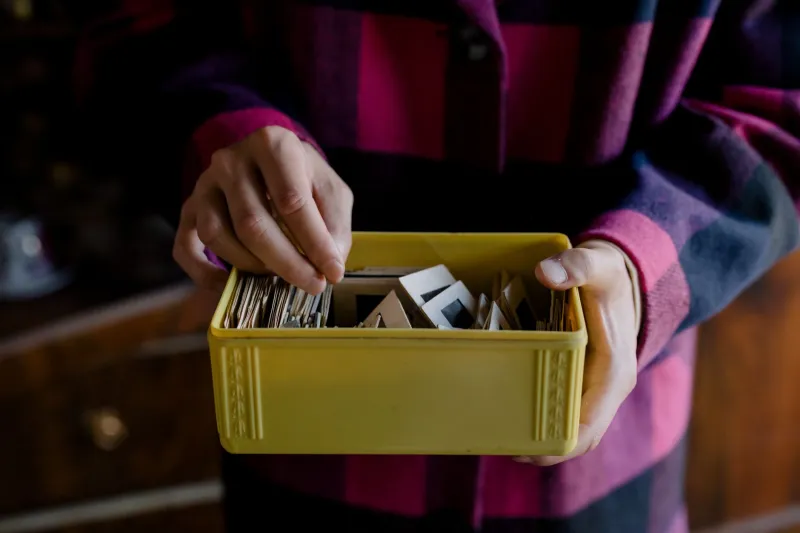
Somewhere on the internet, there's a version of you that you've tried to bury.
Maybe it's an old YouTube video with terrible lighting and worse audio. Maybe it's a tweet from five years ago that represents a take you've since completely reversed. Maybe it's a blog post you wrote when you thought you were going to be a different kind of creator, or a project you half-finished and quietly removed from your portfolio hoping nobody noticed.
Here's the uncomfortable news: some of that stuff is still out there. Cached. Screenshotted. Archived. The internet has a long memory, and it doesn't particularly care what you think about your own early work.
Here's the better news: that's not actually a problem. In fact, if you reframe how you think about it, your digital past — including the embarrassing parts — might be one of the most powerful creative assets you have.
The Archive Is Proof, Not Evidence Against You
There's a tendency to think of old, imperfect, or outdated work as a liability. Something that undermines your current credibility by showing a less polished version of who you were.
But think about how you actually respond when you discover that a creator you admire has a visible past.
When you find the early work of someone whose current output you love, and it's rougher and weirder and less confident than what they make now — what do you feel? Usually, it's not disappointment. It's connection. You get to see the arc. You get to witness the growth. And that growth becomes evidence that the thing they're doing now is real, earned, and hard-won.
Your archive does the same thing for your audience. It's not a record of your failures. It's a timeline of your development — and timelines create narrative. Narrative is what turns a casual follower into someone who's genuinely invested in where you're going next.
Permanence Is a Feature, Not a Bug
Digital permanence gets framed as a threat, especially in a culture that's increasingly aware of how old posts can resurface at inconvenient moments. And sure, context matters — there are things worth genuinely reckoning with and not just rebranding around.
But for the vast majority of creative work? The fact that it persists is a gift.
Every piece of content you've ever published is a data point. It shows what you were thinking about, what you were experimenting with, what you were willing to try before you knew whether it would work. That's a map of your creative mind across time, and maps like that are rare. Most people's creative development happens invisibly, inside their own heads. Yours happened in public, which means it's verifiable.
Verifiable growth is credibility. Not the kind that comes from a credential or a title, but the kind that comes from receipts. You can actually show your work — not just the finished pieces, but the whole messy, iterative process that got you here.
How to Actually Use Your Past Work
Okay, so how do you turn an archive into an asset instead of just a source of low-key anxiety? A few approaches that actually work:
The "then vs. now" frame. Pull up something old and put it in conversation with something current. Not to mock your past self — that's cheap and gets old fast — but to genuinely reflect on what changed and why. What did you believe then that you don't believe now? What did you get right that you didn't fully understand at the time? This kind of reflection is compelling because it's honest, and honesty is in short supply.
Document the evolution explicitly. Don't make your audience piece together your development on their own. Tell them the story. "I started making X because of Y, and here's how it changed" is a narrative structure that works across almost every creative field. People love origin stories, and you have one — you've just never framed it that way.
Let old work point to new work. If someone stumbles across something you made three years ago, that's not a dead end — it's an entry point. The best archives are the ones where old content naturally creates curiosity about what came next. That means linking, referencing, and building bridges between your past and present output.
Reclaim the things you deleted. This one takes some nerve, but it's worth considering. Sometimes the work you pulled down wasn't actually bad — it just made you feel exposed. Bringing something back with context ("I deleted this because I wasn't sure about it, but I think it holds up") is a bold move that tends to land well. It signals confidence and self-awareness simultaneously.
The Creator Who Hides Their Past vs. The One Who Owns It
There are two types of creators when it comes to their archives.
The first type treats their past work as something to manage — to minimize, to hide, to outrun. They keep their profiles curated to only show the current, polished version of themselves. Nothing messy. Nothing transitional. Nothing that might undercut the image they're trying to project.
The second type treats their past work as part of the story. They're willing to reference old projects, acknowledge old opinions, and show the gaps between where they started and where they are now. They understand that the imperfect version of themselves is what makes the current version believable.
Audiences can feel the difference. The curated-only creator feels like a product. The creator who owns their full timeline feels like a person.
And people follow people. Products they just buy once.
Your Creative Journey Is the Content
At some point, the most interesting thing you can make isn't a single great piece of work — it's the story of how you make work at all. Your process, your evolution, your reversals, your breakthroughs. That story spans years, and the only way to tell it is to have a past.
You have one. Most of it's still out there.
Stop trying to delete your way to a cleaner brand. Start building a narrative that's honest about where you came from. The audience for that story is bigger than you think — and they're a lot more forgiving of your early work than you've ever been.