Gear Won't Save You: How Phone-Only Creators Are Outshooting Hollywood on a $0 Budget
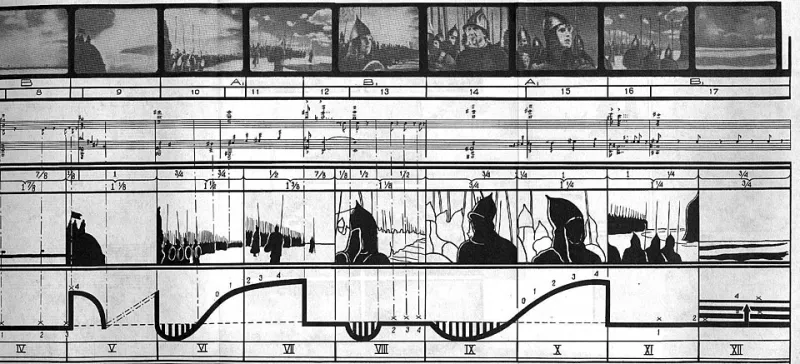
Photo: С.М. Эйзенштейн, Public domain, via Wikimedia Commons
There's a moment every aspiring creator knows intimately. You're scrolling through someone's work — the lighting is gorgeous, the cuts are seamless, the audio is crisp — and you think: I could do that too, if I just had a better camera.
So you research. You comparison-shop lenses. You add a $2,000 rig to a cart you never check out. And in the meantime, you make nothing.
Here's the uncomfortable truth: the phone in your pocket right now shoots better footage than the cameras that filmed most of your favorite movies. And the creators actually building audiences this year? A shocking number of them never bought a single piece of dedicated equipment.
The Phone-First Generation Is Already Here
Consider the trajectory of creators like Khaby Lame, who became the most-followed person on TikTok filming silent reaction videos against a plain wall — no lighting kit, no microphone, no crew. Or the wave of comedians who built entire specials out of selfie-mode clips filmed in their cars between shifts. Or the documentary-style storytellers racking up millions of views on vertical video that was, technically speaking, shot on a device you probably already own.
What they had in common wasn't gear. It was reps. Hundreds of posts. Thousands of hours of practice compressed into short bursts, published before perfectionism could strangle them.
The gatekeeping myth — that you need an A7IV and a lav mic before you're allowed to be taken seriously — died somewhere around the time a guy filmed a whole music video on an iPhone and got a Grammy nomination for it. Steven Soderbergh has shot theatrical releases on phones. Apple runs an entire Shot on iPhone campaign that's basically an admission the barrier is gone.
What Actually Matters in 2025
If gear isn't the bottleneck, what is? Three things, and none of them cost money:
Audio. This is the one place where a cheap upgrade genuinely helps — a $20 wired lav or just getting closer to your subject beats any camera purchase. But even here, free apps like CapCut have built-in noise reduction that handles most smartphone audio sins. Bad sound is fixable for free. Bad ideas aren't.
Editing. CapCut, DaVinci Resolve, and VN are all free, all legitimately professional-grade, and all more powerful than what actual Hollywood editors had twenty years ago. Resolve in particular is the same software used on real feature films — the free version just has some luxury features locked. There is no editing ceiling between you and broadcast quality. There just isn't.
A repeatable idea. The creators winning right now have a format — a premise, a structure, a promise they make to the viewer in the first two seconds. That costs zero dollars and takes a hundred failed attempts to find.
Notice what's missing: lighting packages, gimbals, cinema lenses. Could those things make your work marginally better? Sure. Could they make it meaningfully better? Almost never. The difference between amateur and professional footage in 2025 is mostly a matter of composition, pacing, and taste — none of which ship in a box.
Gear as a Fancy Form of Procrastination
Here's the psychological trap, and I've fallen into it more than once. Buying equipment feels like progress. Unboxing a camera produces a little hit of accomplishment. You've invested, therefore you're serious.
But investment isn't output. The person who spent $5,000 on a setup and hasn't posted is further from a career than the kid filming on a cracked screen who posts daily. Gear purchasing is a way to feel like a creator without enduring the vulnerability of actually creating — because the moment you hit publish, the work can be judged. A camera in a drawer can't be.
There's also a subtler cost: expensive gear raises the stakes of every shoot. When your setup is elaborate, every session becomes a production, and productions are hard to sustain. The phone-only creator shoots whenever inspiration strikes, in any room, on any day. Volume is the entire game early on, and friction is volume's mortal enemy.
A Simple Test
Before you buy anything, try this: post consistently for 60 days using only your phone and free apps. If, at the end of that stretch, you can articulate specific limitations — "my interviews are unusable in loud rooms," not "my footage could look better" — then you've earned an upgrade, and you'll know exactly what to buy.
If you can't articulate that, congratulations. You just saved yourself thousands of dollars and discovered the actual bottleneck was the thing it was always going to be: the work.
The studio you've been waiting for has been in your pocket this whole time. It doesn't need to be charged with excuses.