Accidentally on Purpose: How Creators Turned Honesty Into a Business Model
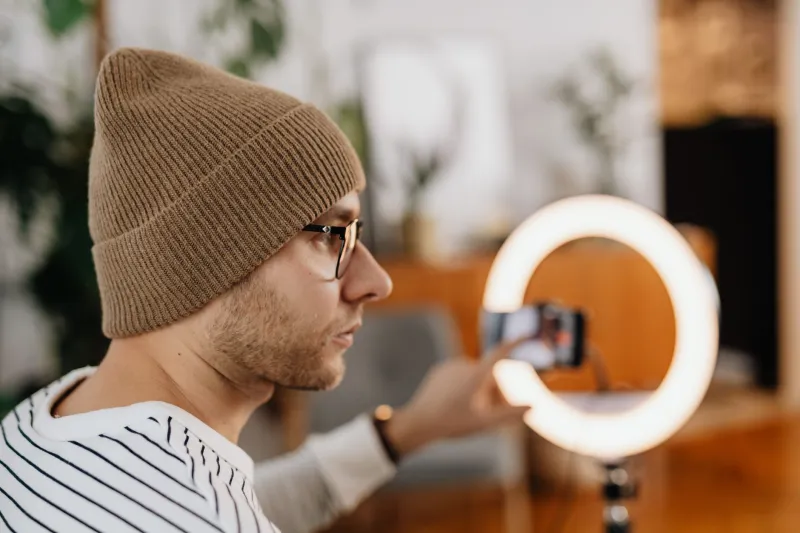
Somewhere along the way, "just being yourself" became a strategy. And the second it did, everything got complicated.
We're living in a creator economy where raw beats refined, where a phone-filmed confession in a car gets more engagement than a studio-produced segment, and where the phrase "I'm not going to sugarcoat this" has basically become its own genre. Audiences reward vulnerability. Platforms amplify it. Brands sponsor it. So it was only a matter of time before creators started asking the uncomfortable question: if I know my honesty is marketable, am I still actually being honest?
That's the authenticity paradox, and it doesn't have a clean answer.
The Moment the Mask Slips — On Purpose
Think about the first time you watched a creator have what looked like a genuine breakdown, or admit to something embarrassing, or post a photo with no filter and a caption about self-acceptance. Your gut reaction was probably empathy. Maybe you shared it. Maybe you followed them right after.
Now think about watching the fifteenth version of that same creator doing the same thing. The lighting's still "bad" — but somehow perfectly framed. The voice still cracks — but right on cue. The caption still says "no filter" — but the skin is suspiciously smooth.
You can feel the difference. Everyone can. And yet it keeps working, at least for a while.
The reason is that audiences aren't just responding to authenticity itself — they're responding to the feeling of being let in. That feeling is powerful enough that even a slightly manufactured version of it can land. The trouble is, it has a shelf life. Once viewers start sensing the machinery behind the curtain, the whole thing collapses fast.
When Your Worst Moments Become Your Best Content
Here's where it gets philosophically messy. A lot of creators discover their most resonant, most-shared, most-talked-about content wasn't planned at all. It was the post they made at 2 a.m. when they were frustrated. The video where they admitted the project was failing. The story where they said out loud that they had no idea what they were doing.
And then something clicks. They think: that worked. And they're not wrong — it did work. So they try to recreate it. Maybe consciously, maybe not. They start "being real" with just a little more intention behind it.
This is the origin story of what you might call strategic vulnerability. It's not fake, exactly. The feelings are usually real. But the decision to share them — the timing, the framing, the platform — starts to involve calculation. And that calculation doesn't automatically make the content worse. But it does change its nature.
The messy truth is that some of the most beloved creators you follow have probably crossed this line a dozen times without even realizing it. The self-awareness crept in slowly. The brand followed the behavior, and then the behavior started following the brand.
Audiences Are Smarter Than Creators Give Them Credit For
Here's the thing about American audiences in particular: we are extraordinarily good at sniffing out a performance. We grew up on reality TV that taught us how editing works. We've watched enough "candid" celebrity interviews to know when someone is being managed. We've seen the behind-the-scenes content that's just as staged as the main content.
We're not naive. We know that when a creator posts a crying selfie, there was a moment where they chose to post it instead of just crying. And most of the time, we're okay with that. What we're not okay with is being condescended to — being sold a performance while being told it isn't one.
The creators who survive the authenticity paradox tend to be the ones who get meta about it. They acknowledge the weirdness of their own position. They say things like, "I know it's ironic that I'm turning my breakdown into content," and then they explore that irony instead of hiding it. That self-awareness becomes its own form of honesty, which is sort of a beautiful loophole.
The Brand That Builds Itself — And the One That Doesn't
There are two kinds of personal brands that emerge from all of this. The first kind is built from the outside in — the creator decides what they want to be known for, engineers content to support that identity, and layers authenticity on top like a coat of paint. This can work short-term, but it's fragile. It requires constant maintenance and tends to crack under pressure.
The second kind builds itself from the inside out. The creator just keeps doing the work, sharing the process, being honest about the wins and the failures — and the brand accumulates around them over time. It's messier. It takes longer. But it's also sturdier, because it's not a performance of who they are. It's just documentation of who they actually are.
The funny part? The second kind of creator usually looks back and realizes their brand is more coherent and more marketable than anything they could have engineered. The honesty wasn't the strategy — but it became one anyway.
So What Do You Do With This?
If you're a creator, or you're thinking about building something under your own name, the authenticity paradox isn't something you solve. It's something you navigate. A few things worth keeping in mind:
Notice when you're performing vulnerability versus feeling it. There's no shame in the former, but knowing the difference helps you stay honest with yourself, even when you're not being fully raw with your audience.
Let your audience in on the meta-conversation. Some of the most interesting content right now comes from creators who openly discuss the weirdness of being a creator. That reflexiveness reads as genuine, because it usually is.
Don't chase the viral honest moment. The posts that hit because they were real worked precisely because they weren't calculated. The second you start engineering them, they smell like strategy. Let the unguarded moments be unguarded.
Understand that your audience is your collaborator, not your customer. The best creator-audience relationships feel like ongoing conversations, not transactions. When you treat your followers like people who deserve the truth rather than consumers who need to be managed, the authenticity problem mostly takes care of itself.
In the end, the creators who figure this out aren't the ones who crack the code on performing realness. They're the ones who stop worrying about whether their honesty is marketable and just keep being honest. The brand follows. It always does.